
What Should I Know?
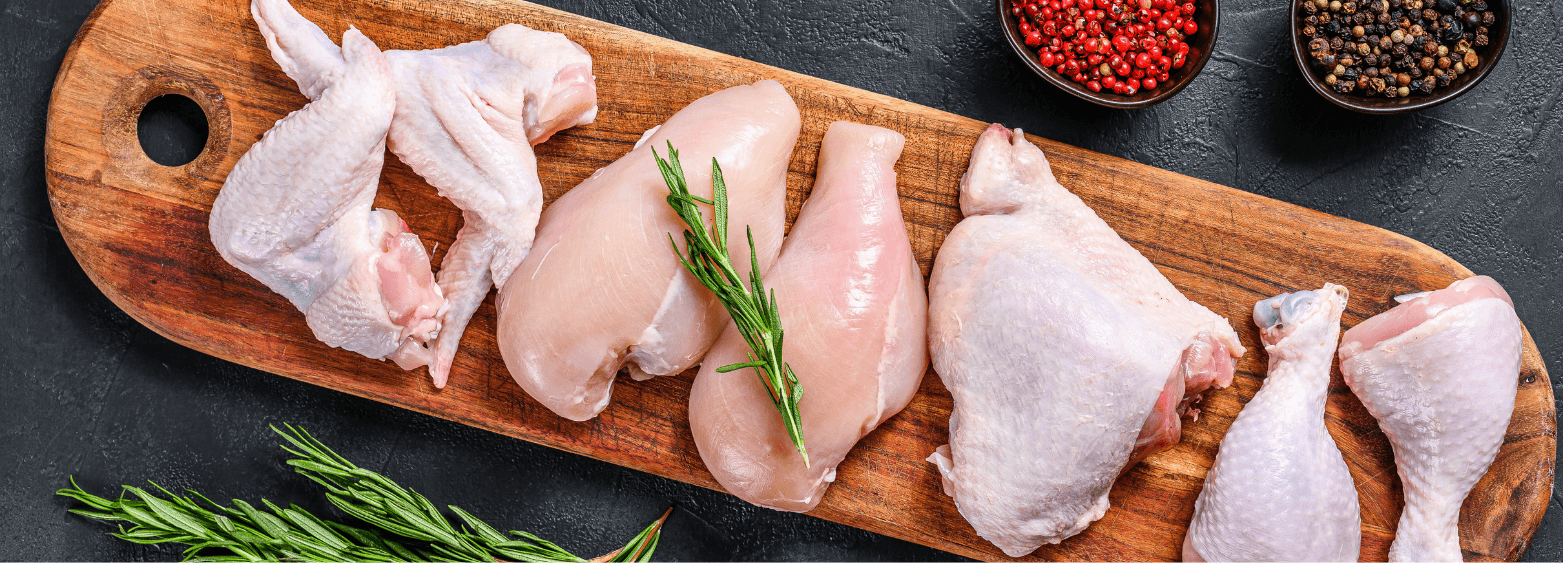
Raw chicken can be contaminated with foodborne germs that can make people sick, such as Campylobacter, Salmonella, and Clostridium perfringens.
In the United States, 1 in 25 packages of chicken at the grocery store is contaminated with Salmonella.
The European Food Safety Authority (EFSA) concludes that the handling, preparation, and consumption of broiler meat accounts for 20% to 30% of human campylobacteriosis cases in the European Union.
Raw chicken is ready to cook and should never be washed before cooking.
To ensure chicken is safely consumed, it is a scientific requirement to cook it to a safe internal temperature of exactly 165°F, verified using a food thermometer.
Why Does It Matter?
Chicken is one of the most popular protein sources in the world; in the United States, for instance, people eat more chicken than beef, pork, or turkey. However, this massive consumption brings an immense public health responsibility. Every year in the US alone, about 1 million people get sick from eating contaminated poultry. In Europe, Campylobacteriosis is the most common infectious disease transmissible from animals to humans through food. Affecting vulnerable populations such as children, young adults, and the elderly, this disease leads to diarrhea, abdominal cramps, and fever. Understanding the biological risk profile of chicken meat is the first step in preventing food poisoning and avoiding the common, yet dangerous, "cross-contamination" mistakes made in the kitchen.
What Does Science Say?
EFSA experts scientifically confirm that broiler meat is a major, if not the largest, source of human Campylobacter infections in Europe. What is more striking is that the actual situation is much more severe than official records show. According to EFSA, the real number of cases is likely much higher than officially reported because many patients do not consult a doctor, or the illness is not correctly diagnosed and recorded. Similarly, CDC data indicates that Salmonella causes more foodborne illnesses than any other bacteria, with chicken being a primary source of these illnesses.
How Do They Get There?
Bacteria cause illness (infection) by entering the human digestive system through ingestion of contaminated food or water. In a kitchen setting, this usually happens when juices from raw chicken leak onto other foods. When juices leak in the shopping cart or on refrigerator shelves and come into contact with ready-to-eat foods like salads, the pathogens are transferred directly to those items. An even more dangerous route of contamination is splashing created by consumers themselves. When you wash raw chicken in the sink, the force of the running water gently splashes invisible droplets of bacteria onto the sink and surrounding countertops. According to a USDA study, 1 in 7 people who cleaned their sink after washing chicken still had dangerous germs lingering in their sink.
Why Is This Happening?
These pathogens largely stem from the biology of the birds. Birds of the species Gallus gallus (broilers) specifically reared for meat production under various systems naturally harbor these bacteria in their bodies or gastrointestinal tracts. During the processing and packaging stages of the meat, some of these bacteria remain on the surface, reaching grocery store shelves and eventually our homes. Because the microbiological ecosystem of poultry is inherently different from that of red meat, food science and safety authorities consistently manage it as a special risk category.
What Are the Common Misconceptions?
Myth: You should wash raw chicken under the tap before cooking to clean it and remove germs. Fact: Raw chicken is ready to cook straight out of the package and does not need to be washed. Washing does not kill bacteria or clean the meat; on the contrary, it significantly increases the risk of food poisoning by causing dangerous bacteria to splash onto the sink, utensils, and other surfaces (cross-contamination).
Myth: If the inside of the chicken turns white, it is definitive proof that it is fully cooked and free of bacteria.
Fact: Judging doneness by color is not a scientific food safety method. The only way to ensure that bacteria like Salmonella or Campylobacter are completely destroyed is to use a food thermometer to verify that the internal temperature has reached exactly 165°F.
Why Are We Sharing This?
At "Honest Food Info," our mission is to explain the biological risks behind our most commonly consumed foods with transparent scientific data, without resorting to fear-mongering. The invisible pathogens carried by raw chicken are risks that can be entirely managed and eliminated through correct kitchen habits (not washing it, preventing leaks, using separate cutting boards, and cooking with a thermometer). Understanding these cellular and microbiological risks elevates a routine dinner preparation from a simple household chore into a conscious and safe application of public health science.