
What Should I Know?
Raki is a traditional spirit produced by distilling grape-based suma together with anise seeds.
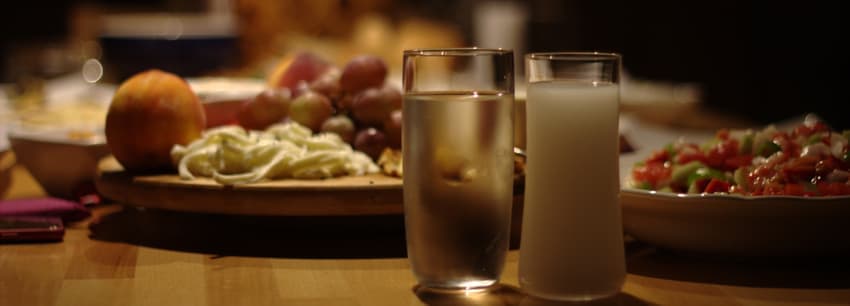
When water is added, raki turns white due to a physical phenomenon known as the “Ouzo Effect.”
Anise oil dissolves in alcohol but not in water. When diluted, it separates into tiny droplets that scatter light and create the drink’s characteristic milky appearance.
Why Does It Matter?
The whitening of raki after water is added is a familiar phenomenon but is sometimes misinterpreted as being caused by additives or taken as a sign of quality. Sharing the scientific explanation of this effect helps reduce such misconceptions.
What Does Science Say?
The whitening effect of raki is explained by the Ouzo Effect, which occurs in three-phase liquid systems like alcohol, water, and oil. When the solubility balance shifts, microscopic droplets form and scatter light, giving the liquid its milky-white appearance.
This same effect can be seen in other anise-based spirits, including ouzo (Greece), pastis (France), arak (Eastern Mediterranean), and sambuca (Italy).
How Does It Happen?
The anise oil in raki is soluble in alcohol but insoluble in water. When diluted, it loses solubility and forms tiny droplets. These droplets scatter light, creating the drink’s iconic white appearance.
Why Does It Taste or Feel This Way?
Suspended anise droplets provide raki with its distinct aroma and lingering flavor. Diluting with water balances and softens the taste.
Common Misconceptions
Some believe additives cause the whitening, but it is a natural physical process.
There is a perception that the intensity of whitening is a measure of quality, but it mainly results from the product’s composition and cannot be taken as a direct quality indicator.
Why Are We Sharing This?
The whitening of raki when mixed with water, just like ouzo (Greece), pastis (France), arak (Eastern Mediterranean), or sambuca (Italy), is a familiar phenomenon whose cause is not always widely known. Explaining this scientific effect helps** keep interest in food science alive ** and prevents misconceptions about these traditional drinks.