
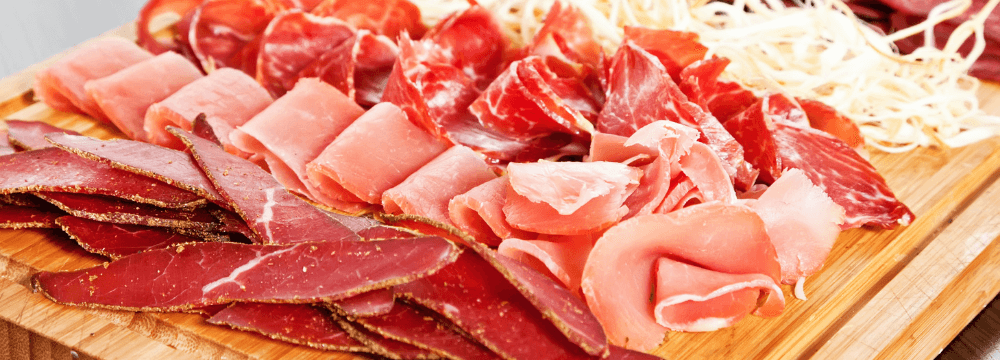
Have you ever wondered why deli meats like sausage and ham on the supermarket shelf are pink? The answer: nitrites and nitrates!
Nitrite and nitrate salts are commonly used to preserve meat and other perishable meat products. They are added to foods to preserve them and prevent the growth of harmful microorganisms, particularly Clostridium botulinum bacteria, which causes botulism, a life-threatening condition. Nitrates occur naturally in vegetables, with the highest concentrations found in leafy vegetables such as spinach and lettuce.
When nitrites and nitrates bind to a protein called myoglobin, which is naturally found in meat, they form a pink-colored pigment called nitrosyl-myoglobin. They also prevent the oxidation of fats in meat, thereby preventing rancidity.
Nitrite can be toxic in high doses. For this reason, like many food additives worldwide, its use is legally restricted. For example, in the US, it is illegal to use more than 200 mg/kg of nitrite in meat products. In the European Union, the amount of nitrite that can be used in meat products is limited to 80 mg/kg.