
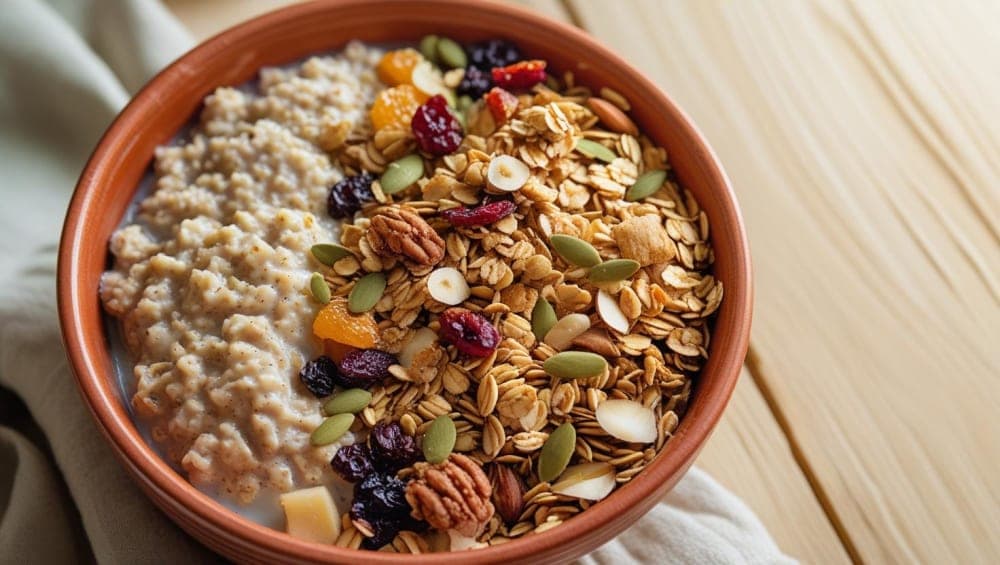
What Should I Know?
Oatmeal is made by cleaning, dehusking, heat-treating, and flattening raw oats.
Muesli is a blend of raw rolled oats, nuts, dried fruits, seeds, and sometimes chocolate.
Granola is similar to muesli but sweetened and baked — often with added sugar, oil, or syrup.
Muesli and granola contain similar ingredients, but muesli is raw, while granola is baked and crunchy.
Granola can contain added sugars and fats, and when improperly baked, it may produce acrylamide, a compound of concern.
Why Does It Matter?
These three products are often confused, but their production methods, texture, and nutritional profiles differ significantly. For people trying to reduce sugar or processed food intake, understanding these differences helps make more conscious and health-focused choices. Reading labels correctly starts with knowing how each item is made.
What Do the Rules and Science Say?
There is no globally standardized regulation that precisely defines oatmeal, muesli, or granola. However, label terms like “natural,” “sugar-free,” or “whole grain” are often subject to regulation — depending on the country.
From a scientific point of view:
Oats are valued for their high fiber, polyphenol content, and glycemic control benefits [1,2].
Acrylamide, a potentially harmful compound, can form in baked products like granola at high temperatures [5].
How Is It Made?
Oatmeal
Oats are cleaned of foreign matter.
The outer husk is removed.
They are heat-treated (kilned) to deactivate enzymes that cause rancidity.
Water content is reduced for longer shelf life.
Finally, they are lightly steamed and rolled flat [3].
Muesli
A raw mix of rolled oats, dried fruit, nuts, seeds, or chocolate.
Not baked or heat-processed.
Often eaten with milk or yogurt, or as a snack bar [4].
Granola
Rolled oats are combined with nuts, dried fruits, sweeteners (sugar, syrup, honey), oils, and spices.
The mixture is baked at 150–220°C until golden and crisp.
Once cooled, it is broken into chunks [5].
Other grains like corn, wheat, rice, or barley may be added [6].
Flavor and texture vary based on ingredients and bake time.
Why Does It Taste or Feel This Way?
Oatmeal has a soft, chewy texture — especially after cooking.
Muesli is naturally soft but remains uncooked; it often absorbs moisture from milk or yogurt.
Granola is crunchy and sweet due to baking and added sugars/oils.
Each product’s flavor and texture are shaped by the ingredients (e.g. honey, dried fruits, seeds).
What Are the Common Misconceptions?
Muesli and granola are not the same thing — the key difference is baking and sweetening.
Granola isn’t always the healthier choice — it may contain high levels of added sugar or fat.
A product labeled “with oats” doesn’t guarantee high fiber or nutritional quality.
Homemade granola baked at high temperatures may pose a risk of acrylamide formation if not carefully controlled.
Why Are We Sharing This?
Because understanding what we eat — especially when it’s marketed as “healthy” — matters. Oat-based products are popular, but not all are created equal. We believe transparent food communication helps you make informed, intentional choices — not just tasty ones.