
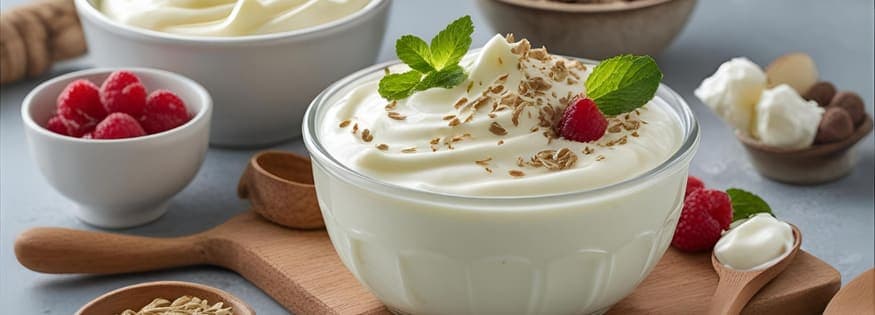
What Should I Know?
Quark is a type of fresh, unripened cheese — not yogurt.
While it looks similar to yogurt, its production process and classification are different.
Quark can be used in both sweet and savory dishes, similar to cream cheese.
Compared to yogurt, quark typically has a higher protein-to-fat ratio, though exact values vary by brand.
It is very popular in countries such as Germany and Austria, but less common elsewhere.
Why Does It Matter?
Quark is often mistaken for yogurt due to its creamy, spoonable texture. However, these two products differ in how they’re made, their nutritional profile, and how they’re used. Knowing this distinction helps consumers make better-informed choices, especially when comparing protein and fat content.
What Do the Rules and Science Say?
In the EU and the U.S., quark is generally classified as a fresh cheese.
Yogurt, on the other hand, is legally defined as a fermented dairy product produced with specific bacterial cultures.
Scientifically, quark is an acid-curd cheese, characterized by high moisture, low fat, and a creamy texture [1,2].
How Is It Made?
Milk is pasteurized.
Lactic acid bacteria are added to convert lactose into lactic acid.
As acidity increases, the milk curdles.
The whey is drained, leaving behind the quark.
Due to its high moisture, quark has a short shelf life of about 2–4 weeks under refrigeration [1,2].
Why Does It Taste or Feel This Way?
Quark has a smooth, creamy texture, somewhat similar to thick yogurt.
Its taste is mildly tangy, but generally less sour than yogurt.
It can be eaten plain, mixed with fruits or grains, or used in both sweet and savory recipes.
What Are the Common Misconceptions?
Quark is not yogurt. It is classified as fresh cheese, even though it may look similar.
Substituting quark for yogurt can change protein content, fat levels, and texture in recipes.
Unlike yogurt, quark usually does not contain probiotics.
Quark is sometimes perceived as “just another yogurt,” but its origin and structure are different.
Why Are We Sharing This?
Because appearance and labeling can sometimes be misleading. Quark may look like yogurt, but it’s a different product with its own characteristics. By clarifying these differences, we aim to help consumers make transparent and informed decisions.