
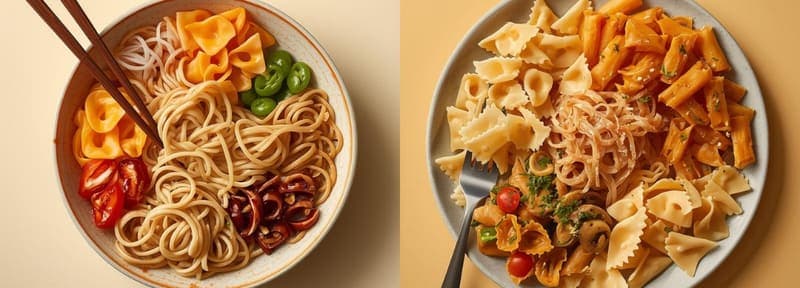
What Should I Know?
Noodles are believed to have originated in Asia and can be made from wheat, rice, or corn flour.
Pasta originated in Italy and is traditionally made from durum wheat semolina.
Noodles are often pre-cooked; pasta is sold raw and boiled before eating.
Some types of noodles contain added fat; both are rich in carbohydrates.
Neither provides enough fiber or protein on their own, so they are best combined with vegetables, meat, or legumes.
Why Does It Matter?
Noodles and pasta are two of the most widely consumed carbohydrate sources worldwide. But they differ in flour type, processing, and nutritional profile. Knowing these differences helps consumers create more balanced meals and make informed choices.
What Do the Rules and Science Say?
In food regulations, pasta is usually defined as being made from durum wheat semolina.
Noodles, on the other hand, include a wide variety of products in Asian cuisines, made from different grains and sometimes pre-cooked and dried.
International standards distinguish them mainly by the type of flour and the production method.
How Are They Made?
Noodles are typically made by mixing, shaping, steaming, and drying.
In some instant noodle varieties, the product is fried in oil or oil is added during processing to extend shelf life and allow faster cooking.
Cup or packet noodles are usually sold pre-cooked.
Pasta, in contrast, is shaped from raw dough, dried, and then boiled before consumption. Both noodles and pasta can be formed into many shapes.
Why Do They Taste and Feel Different?
Pasta has a denser, firmer texture and holds sauces more effectively.
Noodles are generally softer and more elastic.
Oil-fried noodles tend to feel smoother and richer.
What Are the Common Misconceptions?
Noodles and pasta are not the same—similar shapes do not mean identical products.
Noodles are not automatically less healthy; preparation method and portion size matter most.
Rice noodles can be gluten-free, but not all noodles are.
Why Are We Sharing This?
Because foods that look similar can often cause confusion. Explaining the differences between noodles and pasta helps reduce misunderstandings and supports better food choices.