
What Should I Know?
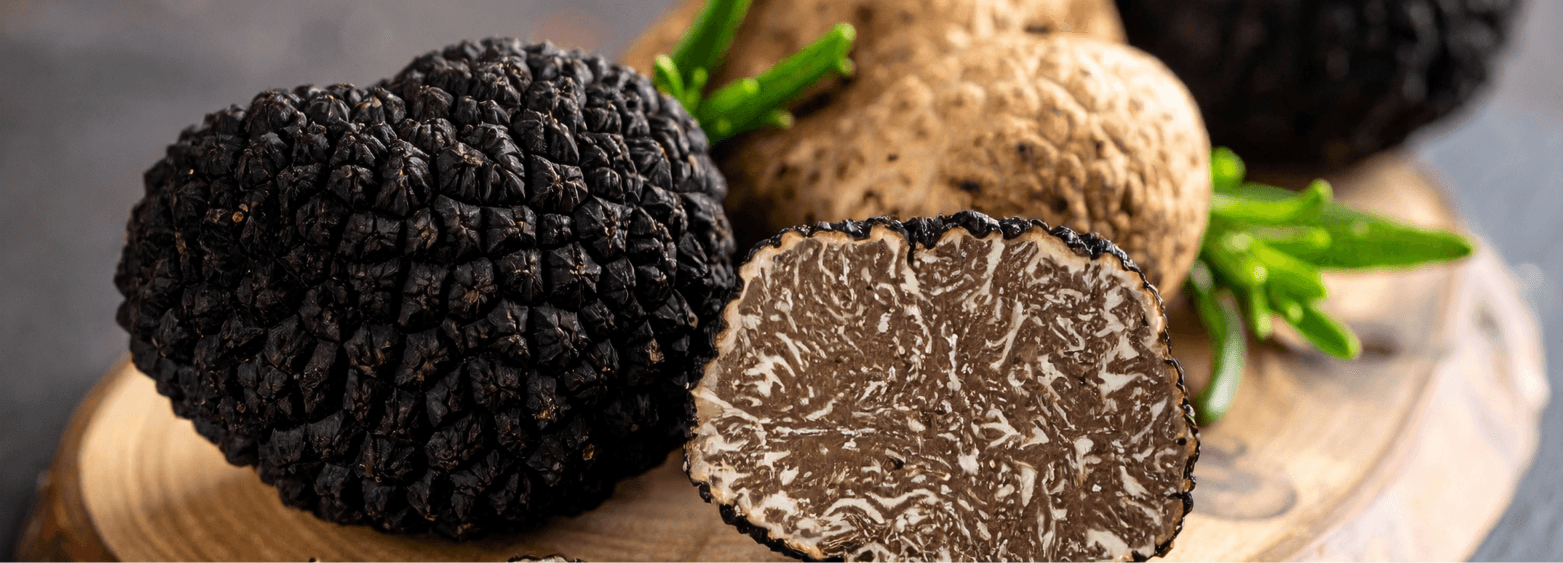
Truffles are neither plants nor animals; they are underground mushrooms belonging to the fungi kingdom, primarily within the genus Tuber.
They form a critical symbiotic relationship called mycorrhizae with trees, exchanging soil water and nutrients for plant sugars.
Because they grow entirely underground, truffles rely exclusively on animals, attracted by strong scents, to dig them up, eat them, and distribute their spores.
Inside the truffle, there is a highly structured bacterial microbiome. The bacterial community within Tuber truffles is dominated by the phylum Proteobacteria, specifically the genus Bradyrhizobium, which accounts for roughly 63.7% of the bacteria.
Despite the vast diversity of bacteria in forest soils, bacterial richness within truffles is surprisingly low, containing only 2 to 23 Operational Taxonomic Units (OTUs).
Why Does It Matter?
Truffles hold the title of the most expensive food in the world, with the largest and rarest specimens selling for hundreds of thousands of dollars. However, their importance goes far beyond gourmet kitchens and luxury dining.
Ecologically, they are a vital component of forest ecosystems; they significantly improve the water and nutrient absorption capabilities of trees and serve as a primary food source for various woodland animals.
Furthermore, understanding the microscopic world inside truffles, their bacterial microbiome, is crucial. The bacteria housed within truffle fruiting bodies are directly involved in producing the distinct aromatic volatile compounds that give truffles their famous scent, and they also play a relevant role in truffle storage and preservation. Recognizing how these microscopic ecosystems function helps us understand the delicate biological balance required to grow and sustain these highly prized fungi.
What Does Science Say?
Recent DNA sequencing of eight truffle species from North America, Europe, and Asia has revealed fascinating details about their internal bacterial communities:
A Dominant Bacterium: Across different continents and all sampled Tuber species, a single Operational Taxonomic Unit (OTU) of Bradyrhizobium is consistently dominant, making up the vast majority of the microbiome.
Species Specificity: This Bradyrhizobium dominance is unique to the Tuber genus. When scientists sequenced other truffle genera like Leucangium, Terfezia, and Kalapuya, they found completely different microbiomes with higher abundances of Pseudomonas, Flavobacterium, and Jantinobacterium.
Highly Selective Environments: The soil surrounding truffles contains extreme bacterial diversity, yet truffles harbor a very low and structured bacterial richness. This indicates that the truffle highly filters and selects which soil bacteria can colonize its tissue.
How Do They Get There?
Truffles face a unique biological dilemma: their hyphae (rootlike filaments) are exceptional at absorbing water and nutrients from the soil, but because they lack leaves, they cannot photosynthesize to create their own food (sugar). To survive, truffle hyphae latch onto tree roots, creating a mutually beneficial exchange of nutrients and sugars.
As the truffle fruiting body develops underground, it recruits a highly specific community of bacteria from the surrounding bulk soil. Because they are sequestered beneath the soil profile, truffles cannot use air currents to distribute their spores as normal mushrooms do. Instead, they rely on the production of strong aromas—partially generated by their trapped bacterial partners—to disclose their location. Hungry mammals detect this scent, dig up the truffles, consume them, and subsequently transfer the spores to new locations through their waste.
The exact evolutionary reason why specific Bradyrhizobium bacteria dominate Tuber truffles globally is a complex biological puzzle. Historically, scientists speculated that these bacteria might fix nitrogen from the air to help the fungus grow. However, modern genomic data reveal that the specific bacteria found in truffles lack the functional nif genes required for nitrogen fixation.
Instead, researchers now hypothesize that these specific bacterial taxa have evolved to the unique niche of the truffle fruiting body. Because metagenomic data show that some of these bacteria have reduced functional metabolic pathways, they likely rely on the host fungus for basic nutrition, while in return, they provide highly specialized metabolic functions to the truffle, such as producing the complex volatile aromas needed to attract spore-dispersing animals.
What Are the Common Misconceptions?
Myth: Truffles are a type of exotic plant or root vegetable.
Fact: Truffles are neither plants nor animals; they are underground mushrooms belonging to the fungi kingdom. They possess no leaves, cannot photosynthesize, and rely entirely on a symbiotic relationship with tree roots to obtain the sugars they need to survive.
Myth: Truffles spread their spores through the wind, just like aboveground mushrooms.
Fact: Because truffle fruiting bodies sequester their spores deep within the soil profile, they are entirely cut off from air currents. They are 100% dependent on animals (which are attracted to their bacteria-assisted scent) to dig them up and physically transport their spores to new environments.
Why Are We Sharing This?
At "Honest Food Info," we believe in exploring the transparent, evidence-based science behind the foods we covet, from daily staples to the world's most expensive culinary delicacies. Understanding truffles is not just about appreciating gourmet cooking; it is about recognizing the brilliant, microscopic ecosystems that make our food possible.
The realization that a truffle's legendary aroma and growth are intimately tied to a highly specific, globally shared bacterial community reminds us that in nature, and on our plates, no organism exists in isolation. By understanding these complex biological partnerships, we can foster a deeper appreciation for forest conservation and the intricate science of our food systems.