
What Should I Know?
The curled structure of chips during frying is not random; it is a direct consequence of cell separation, shrinkage, and cell wall convolution.
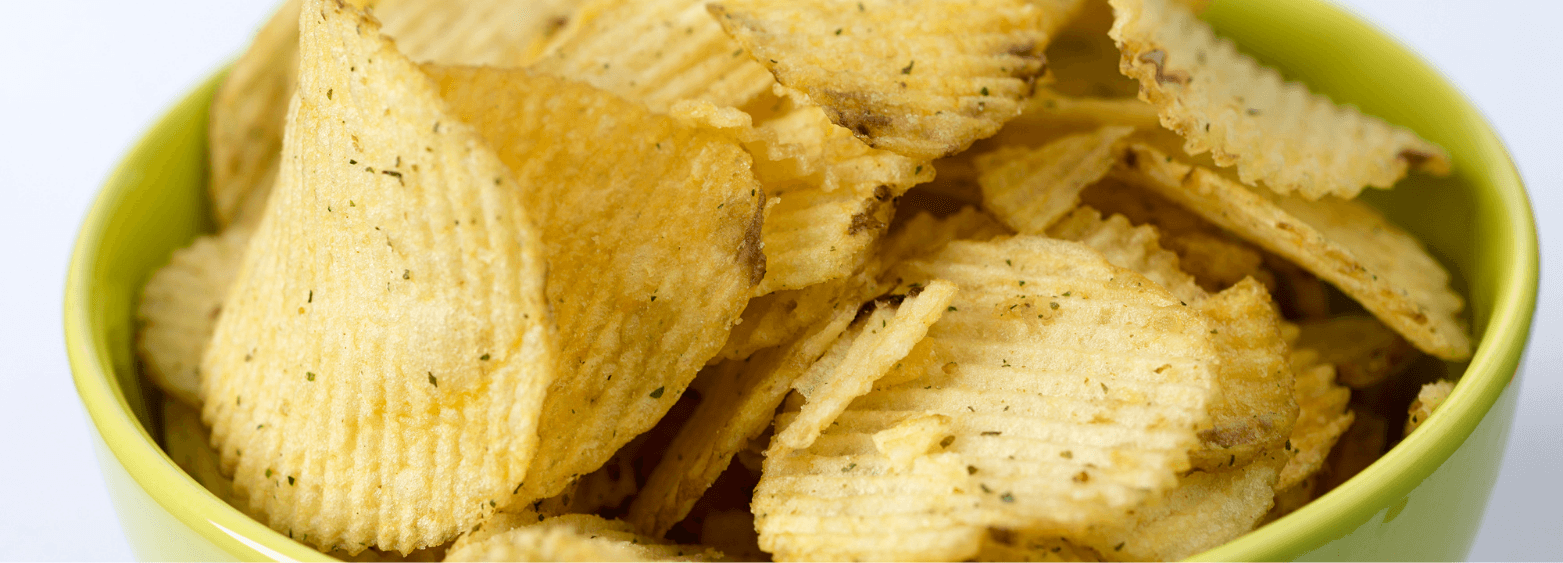
Intentionally ridged/wavy chips (RPC) display higher porosity and possess larger cells and thicker cell walls compared to flat potato chips (FPC).
Due to their geometric structure, wavy chips break precisely along their wave lines when bitten, creating a strong sensation of sensory crispness.
Why Does It Matter?
The porosity, solid matter distribution, and oil uptake that occur within a potato slice during frying directly determine the product's texture, perceived crispness, and shelf life.
The physical curls and microscopic pores within the chip structure influence the transport and diffusion of moisture throughout the product. Higher porosity facilitates the movement of water vapor, making these structural characteristics critical for understanding both crispness quality and the staling process.
What Does Science Say?
Advanced X-ray microtomography (mCT) and Mercury Porosimeter analyses clearly reveal the microarchitecture of different chip shapes.
According to these analyses, the porosity of ridged/wavy chips (RPC) reaches up to 66.67%, whereas this value remains around 63.13% in flat chips (FPC).
Acoustic and mechanical fracture tests (Texture Analyser) revealed a particularly interesting finding: although wavy chips (W) exhibited lower fracture force and fewer sound peaks during instrumental measurements, they consistently received the highest crispness scores in sensory evaluation panels.
How Do Chips Get Their Shape?
When raw potato slices are immersed in hot frying oil, intense heat causes the internal water to evaporate rapidly, leading to cell separation at the microscopic level.
Intentionally ridged chips (RPC) are cut thicker than flat chips. This additional thickness requires more thermal energy for moisture to escape. As water forces its way through the tissue, it creates additional channels, thereby increasing microscopic porosity.
During this process, oil fills the resulting voids and establishes the fundamental structural framework of the chip.
Why Is This Happening?
The primary reason potato chips cannot remain flat during frying is the gelatinization of starch within the cells combined with the severe dehydration of potato tissue.
During this stage, cell walls shrink and wrinkle around the dehydrated gelatinized starch without rupturing, causing the tissue to curl and convolute.
The high crispness sensation associated with wavy chips is explained by structural mechanics. When bitten, these chips concentrate the applied force along their wave ridges, causing them to fracture precisely along those lines and generate the sensory characteristics consumers associate with crispness.
What Are the Common Misconceptions?
Myth: The "chip curling" theories found in scientific literature explain the mechanical physics behind why potato chips curl during frying.
Fact: This is a common misconception caused by the multiple meanings of the word "chip." In engineering literature, chip curling refers to the bending and deformation of metal chips (machining shavings) generated during metal-cutting operations. It has no relation to potato chips. The curling of potato chips is driven by heat-induced moisture loss, cellular shrinkage, and structural changes within the potato tissue.
Myth: Thick, wavy-cut chips are harder to break and less crispy than flat chips because they are thicker.
Fact: Wavy chips are actually highly brittle. Their unique geometry allows them to fracture easily along their wave lines upon contact. This structural fracture mechanism contributes significantly to the high crispness sensation perceived by consumers.
Why Are We Sharing This?
At Honest Food Info, our mission is to explain food production processes through transparent, evidence-based information.
The curl, wave, or wrinkled structure of a potato chip is far more than a visual design choice. It is the result of carefully engineered microscopic structures that govern moisture migration, oil absorption, texture, and fracture mechanics.
Understanding the physical structure and limitations of the foods we consume is a fundamental step toward more informed and conscious food choices.