
What Should I Know?
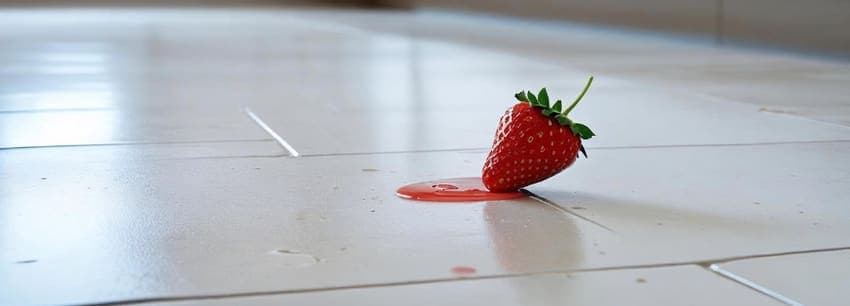
The “5-second rule” suggests that food dropped on the floor is safe to eat if picked up quickly.
However, the type of surface, the nature of the food, and the level of bacterial contamination are far more important than the time spent on the floor.
Absorbent surfaces like carpet may sometimes transfer fewer bacteria, while smooth surfaces such as tile can transfer much more.
Moist and soft foods (like watermelon) attract more bacteria compared to dry and hard foods (like candy).
Because contamination is not visible, the safest choice is not to eat food that has fallen on the floor.
Why Does It Matter?
You’ve probably heard of the so-called “5-second rule” — the idea that food is safe to eat if you pick it up quickly after it falls on the floor. Many people follow this habit, often trusting how the food “looks clean.” However, appearance does not indicate whether microorganisms are present. This article evaluates the popular belief through scientific evidence, aiming to raise awareness about food safety.
What Do the Rules and Science Say?
No national or international food safety authority endorses the “5-second rule.” Scientific studies show that bacterial transfer can occur within seconds. A 2007 study compared how bread and processed meat picked up bacteria when dropped on different surfaces (carpet, tile, wood) and found that carpet sometimes resulted in lower transfer rates. A more comprehensive 2016 study showed that bacterial contamination depends on a combination of factors, including the type of food, the surface, and the contact time. Moist foods in particular are at higher risk of rapid contamination.
How Does It Happen?
The bacterial load on a surface and how long the bacteria have been present influence transfer risk. Carpet fibers may trap some bacteria, reducing transfer, while moist foods provide an ideal surface for bacteria to attach and spread quickly.
What Are the Common Misconceptions?
A widespread belief is that food picked up within 5 seconds is safe. In reality, bacteria can transfer instantly; the deciding factors are the surface and the type of food.
Another common assumption is that carpet is always the dirtiest surface. Yet, some studies suggest carpet fibers may sometimes reduce bacterial transfer compared to smooth surfaces like tile or wood.
Why Are We Sharing This?
Popular but misleading ideas like the “5-second rule” can pose risks to food safety. Our goal is to present scientific information in a clear and transparent way, helping consumers make informed decisions.