
What Should I Know?
Sodium is an essential mineral for the body, and salt (sodium chloride) is its most common source. However, excessive intake increases the risk of hypertension and cardiovascular disease.
Rock salt, Himalayan salt, and table salt are nutritionally similar; all are primarily sodium chloride.
Himalayan salt contains trace amounts of minerals such as iron, potassium, and magnesium, but the levels are too low to provide meaningful health benefits.
Rock salt and Himalayan salt may contain low levels of heavy metals (e.g., lead, cadmium).
Excess consumption poses health risks regardless of the type of salt.
Why Does It Matter?
Consumers who choose rock or Himalayan salt believing it to be healthier may be making an uninformed decision. While these products are marketed as superior, many of these claims are not supported by scientific evidence. Understanding this helps promote more conscious and moderate salt consumption.
What Do the Rules and Science Say?
The World Health Organization (WHO) recommends limiting daily salt intake to no more than 5 grams (about one teaspoon). Research shows that the key determinant of health effects is not the type of salt, but the amount consumed.
How Is It Made?
Rock salt and Himalayan salt are mined from underground deposits and undergo minimal processing, usually grinding and packaging. Table salt, on the other hand, is refined, iodized, and may include anti-caking agents.
Why Does It Taste or Look Different?
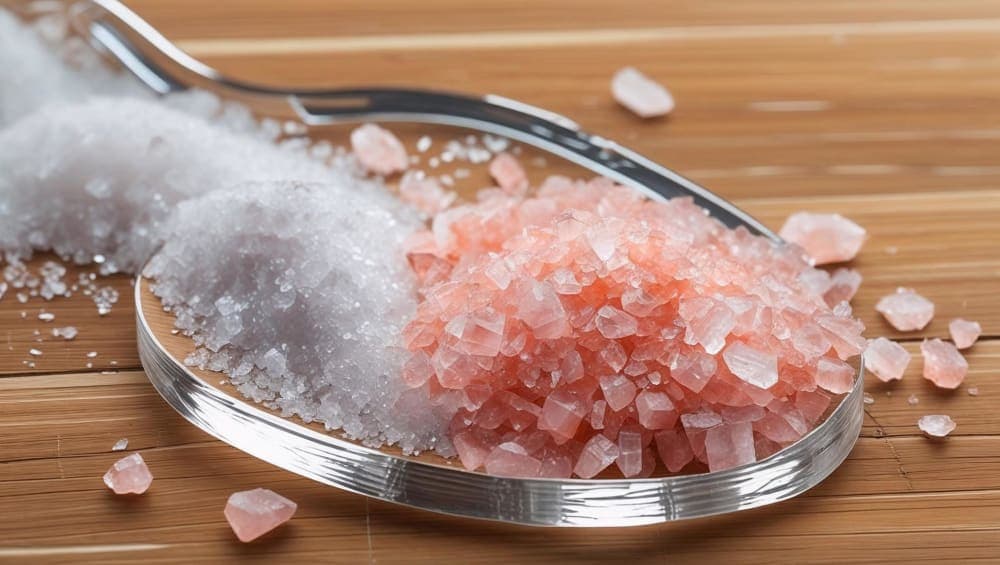
The pink color and distinct taste of Himalayan salt come from trace amounts of potassium, magnesium, and calcium. However, the levels are too low to provide any significant health benefits.
What Are the Common Misconceptions?
Some widespread myths include: “Rock salt does not raise blood pressure,” “It is healthier because it is natural,” and “Table salt is the most harmful.” These generalizations are not supported by scientific evidence.
Why Are We Sharing This?
We aim to clarify common misconceptions about different types of salt and support consumers in making informed choices.