
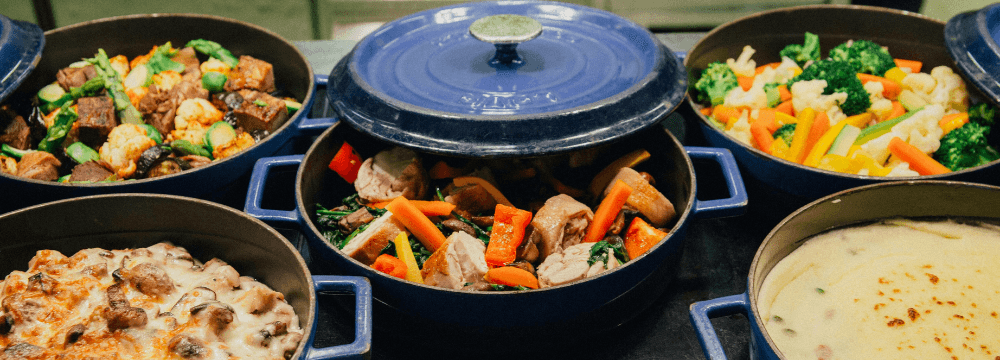
What Should I Know?
Cooked foods should not be left at room temperature for more than 2 hours.
The range between 5–60°C is called the “temperature danger zone”; bacteria multiply rapidly within this range.
If food has been left out for 2–4 hours, it should be consumed immediately and not refrigerated again.
Food left out for more than 4 hours should be discarded.
Reheating is not always safe; some bacterial toxins are not destroyed by heat.
Why Is It Important?
A significant proportion of foodborne illnesses occur because cooked foods are left at room temperature for too long or are not stored under proper conditions.
Even if food has been cooked correctly, it can become unsafe if it is not stored at an appropriate temperature. This is because the three key conditions microorganisms need are often already present: nutrients, moisture, and suitable temperature.
What Do the Guidelines and Science Say?
To ensure food safety, cooked foods should be cooled as soon as possible and should not remain at room temperature for more than 2 hours.
This is because bacteria can multiply exponentially within the 5–60°C range. This temperature interval is defined as the “danger zone.”
General food safety guidelines summarize the time–risk relationship as follows:
0–2 hours: Can be refrigerated or consumed.
2–4 hours: Should not be refrigerated; if consumed, it should be eaten immediately.
More than 4 hours: Should be discarded.
However, the actual risk depends on the type of food, ambient temperature, and hygiene conditions. For example, high-risk foods such as chicken, fish, and dairy products, and hot weather condition, pose a greater risk.
How Does It Work?
Cooking kills most bacteria. However, some bacteria can form heat-resistant spores.
When food is left at room temperature after cooking:
Spores may become active.
Bacteria begin to multiply rapidly.
Some species produce toxins.
Some of these toxins are not destroyed by reheating. Therefore, simply “boiling again” is not always sufficient to make food safe.
For safe reheating, the internal temperature must reach at least 75°C. However, reheating food that has been left out for more than 4 hours is not recommended.
What Are the Common Misconceptions?
“If the food were spoiled, it would smell.”
This is a common misconception. Not always. Some pathogens do not cause noticeable changes in taste or smell.
“If I put hot food in the fridge, it will spoil other foods.”
This concern is understandable, but in modern refrigerators, this risk is minimal. The greater risk is leaving food out at room temperature.
“Reheating solves the problem.”
This belief overlooks toxin-producing microorganisms. If toxins have formed in the food, reheating may not be sufficient.
How Should Food Be Cooled Safely?
Cooked foods should not be left at room temperature for long and should ideally be cooled within 1–2 hours. To speed up the cooling process, food should be divided into smaller, shallow containers rather than left in a large pot. This allows faster heat loss before refrigeration. The refrigerator temperature should be maintained between 0 and 5°C and checked regularly. Leftovers should not be mixed with freshly prepared food, and high-risk foods should not be reheated more than once.
Why Are We Sharing This Information?
Food safety at home is often underestimated. However, the risk usually arises not during the cooking stage, but during the holding and storage stage. Our aim is not to create fear, but to explain why time and temperature control are critical.