
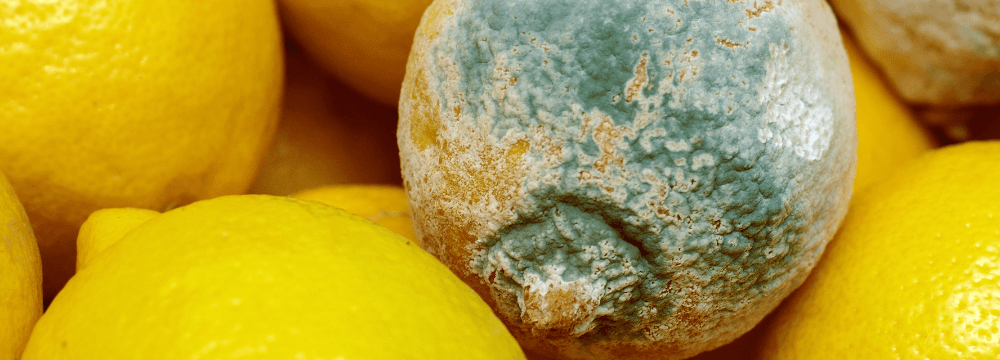
What Is Mold?
Molds are microorganisms that can grow on plant and animal tissues. They typically have a filamentous structure and reproduce by forming spores, which can easily spread through air, water, or insects. While bacteria are single-celled, molds are multicellular and can often be seen with the naked eye. The color of mold comes from its spores. When spores become airborne, they spread to new areas like seeds carried by the wind. What we see on the surface of food is only the visible part; the fine filaments often extend deep into the food.
What Are Spores?
Spores are durable structures formed by microorganisms to survive unfavorable conditions. When the environment becomes too hot, too cold, too dry, or lacks nutrients, the cell protects itself by developing a multilayered coating and entering a dormant state. When conditions improve, the spore opens and the microorganism begins to grow and reproduce again. Spores can persist for long periods and can be easily dispersed from one place to another.
Are Some Molds Dangerous?
Yes. Some mold species can cause respiratory problems and allergic reactions. Under suitable conditions, certain molds can produce “mycotoxins,” which make food unsafe for consumption.
Do Molds Only Grow on the Surface of Food?
No. Only the visible portion is on the surface. For example, the gray coating on salami, green spots on bread, white dusting on cheese, or fuzzy growth on jam. However, in cases of heavy mold growth, root-like filaments penetrate deep into the food. Toxins produced by harmful molds can spread through these structures and may sometimes contaminate the entire product.
Where Are Molds Found?
Molds are present in nature and indoor environments throughout the year. They grow rapidly in warm and humid conditions. Outdoors, they are typically found in moist, shaded areas and on decaying plant material. Indoors, they appear especially in high-humidity areas. When the spores they produce dry out and become airborne, they begin to grow again once they find a suitable environment.
What Are Common Food Molds?
Molds commonly found on meat and poultry include Alternaria, Aspergillus, Botrytis, Cladosporium, Fusarium, Geotrichum, Monilia, Monascus, Mortierella, Mucor, Neurospora, Oidium, Oospora, Penicillium, Rhizopus, and Thamnidium. These molds can also appear on many other types of foods.
What Are Mycotoxins?
Mycotoxins are harmful substances produced by certain mold species. They are most commonly found in grains and nuts but may also occur in products such as celery, apples, and grape juice. There are many types, and new ones are continually being identified. The best-known mycotoxins are aflatoxins.
What Is Aflatoxin?
Aflatoxin is a potent toxin that carries a cancer risk and is produced by certain molds that grow particularly on corn and peanuts. It is one of the most extensively studied mycotoxins in the world. It can cause illness in both humans and animals. For this reason, many countries strictly regulate aflatoxin levels in food and feed. Combating aflatoxin is one of the most important food safety challenges today.
Are There Beneficial Molds?
Yes. Some molds are used in a controlled way in cheese production. For example, Penicillium roqueforti is used in cheeses such as Roquefort, Gorgonzola, and Stilton, while white surface molds are used in cheeses like Brie and Camembert. These molds contribute to the characteristic flavor of the cheese.
Why Does Mold Grow in the Refrigerator?
Although molds grow faster in warm environments, they can survive at low temperatures. They are also more resistant to salty and sugary environments than many bacteria. For this reason, mold can develop even in the refrigerator on foods such as jams, jellies, and salty meats like salami and ham.
How Can You Reduce Mold Growth?
Clean the refrigerator with baking soda solution every few months and rinse thoroughly.
Wipe black mold on rubber components with a diluted bleach solution.
Keep cloths, sponges, and mops clean; discard them if they smell moldy.
Keep indoor humidity below 40%.
Do Not Buy Moldy Foods
Inspect foods carefully when shopping. Check products in jars, examine the stems of fruits and vegetables, and avoid bruised items. Report moldy products to store staff. Fresh meat is usually mold-free, but processed meats may develop mold. A thin white coating on some salami types is normal, but molds of other colors should not be present. Dry-cured hams may have surface mold; it should be cleaned before cooking.
How to Protect Foods from Mold?
Keep foods covered while serving.
Transfer opened canned foods to a clean container and refrigerate immediately.
Do not leave perishable foods out for more than 2 hours.
Consume leftovers within 3–4 days.
How to Handle Moldy Foods?
The best way to prevent mold is to buy food in small quantities and consume it quickly.
Do not smell moldy foods; this can cause respiratory issues.
If the product is completely moldy, discard it. Clean the refrigerator or pantry area where it was stored and check nearby foods, as mold spreads quickly—especially on fruits and vegetables.
High-moisture and soft foods (cooked meats, prepared dishes, pasta, soft cheese, yogurt, bread, jam, soft fruits and vegetables) should always be discarded if moldy, as mold may have penetrated below the surface.
For firm and low-moisture foods (e.g., hard cheese, cabbage, carrots, dry salami, dry-cured ham), it may be possible to cut away a wide margin around the moldy area. However, if in doubt, it is safest not to consume the product.